Sunday, October 4, 2015

Fun With Shapes


Last week we wrapped up our plane shapes unit learning all about the circle, square, rectangle, triangle, ellipse, and hexagon.  One of my favorite things to do during this unit is watch them build these shapes with their bodies.  Working together with their peers, the students must decide how many sides the shape has and make a group with that many people. 


One of the last things we do during this unit is build Shape Monsters.  Using any of the shapes they want, they create a monster of their choice.  I love seeing how these turn out, and their creativity really shines.  After creating their monsters, the students count the number of different shapes they used and graph their results.


Thursday, September 17, 2015

What is Kagan Cooperative Learning?

Kagan Cooperative Learning is a way of structuring your daily activities and lessons to ensure that each and every child is actively engaged in the learning process and lesson. The students are taught various structure methods to engage them in classroom activities.  "The Kagan Structures have proven themselves effective teaching and learning tools for cooperative learning, multiple intelligences, character education, language learning, and emotional intelligence. " (Kagan Online)

One example of a structure is Hand-Up, Stand-Up, Pair-Up.  During this the students will be walking around the room while the music is playing.  When the music stops, the children will each find the person closest to them and high five.  Depending on what we are working on they will share information, count, talk/listen, etc.  In the activity below the students were in engaged in active talking and listening while they were sharing their all about me posters.

All About Me: Kagan Hand-Up, Stand-Up, Pair-Up


Another structure is Quiz, Quiz, Trade.  Here the students again walk around the classroom while the music is playing and find a partner when the music stops.  Taking turns, the students one at a time, share/teach their partner the number on their flash card.  When I say trade they switch cards.  Each child is then leaving his or her partner knowing a new number which was just taught to them by a student in the classroom.  We do this with letters, rhyming words, and will eventually use words!!  So EXCITING!!!
Numbers : Kagan Quiz-Quiz, Trade


Here is an example of the Rally/Coach strategy.  The students were putting the letters of the alphabet in alphabetical order.  ABC Order as often we call it.  They were taking turns selecting the appropriate next letter.  If a child happened to pick the wrong letter, their partner would "coach" them as to which letter would be correct.  I often call them the TEACHERS.  That makes it even more exciting because they feel like they are totally in charge!!  

Alphabetical Order : Kagan Rally/Coach


For more information visit Kagan Online.

Sunday, September 13, 2015

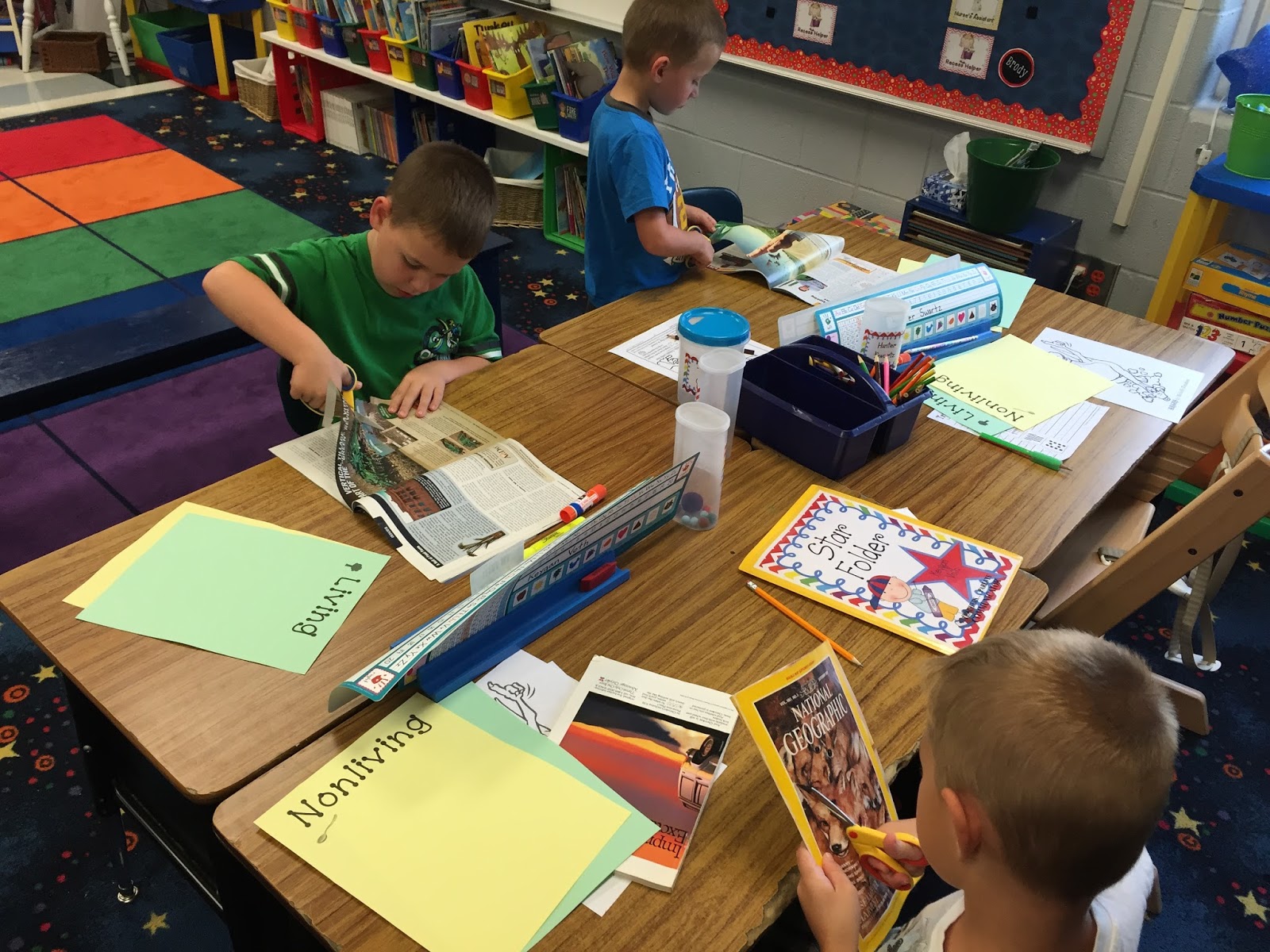
Living vs. Nonliving

The last two weeks the kids have been learning all about living and nonliving things in the world around us.  We talked about what make something living.  A living something needs food, water, air, and it can grow and change.  We looked at the life cycles of a frog and caterpillar, and we talked about the changes we see in all living things as they grow.

Magazine Sort : Living and Nonliving

We also talked about the different parts of a plant and went on a nature walk to look at sunflowers.  Then we identified the roots, stems, leaves, and flowers on the plants around us.
Now that we are experts on living things and plant, they kids were given 4 seeds last Friday to take care of and grow.  They will be documenting the changes they see in their seeds and will have to water them everyday as they grow and change.

Investigating Our Seeds


Monday, August 31, 2015

Getting to Know You

In class last week the kiddos created All About Me posters.  The posters were then turned into the students in our class.  Using the Hand-Up, Stand-Up, Pair-Up Kagen strategy, the students walked around the room and shared information about themselves with the other kids in the class.  This was a great way to work on our oral language and listening skills.  Each child had to be ready to share something they learned about a fellow classmate, and they were all really great listeners!!!